
A new aerospace technology can make a lot of progress on the ground. Engineers can model it, test individual components, run simulations and validate performance in controlled environments.
Eventually, though, you need to know what happens when it flies.
That’s where development can slow down.
For many aerospace programs, getting access to an aircraft, integrating the technology and putting together a flight test program can take significantly more time and coordination than expected. Instead of flight testing being another step in development, it becomes a bottleneck that holds up the steps that come after it.
Understanding why those delays happen, and planning for flight testing earlier, can help keep a program moving.
Why Does Flight Testing Become a Bottleneck?
Traditional flight test programs can involve a lot of moving pieces. The aircraft has to be available and appropriate for the mission. The payload or technology needs to be integrated. Engineering, instrumentation and data requirements have to be addressed. Flight schedules, test locations and operational requirements all have to line up.
If those conversations don’t begin until the technology is considered “ready to fly,” teams may discover that getting into the air is going to take longer than anticipated.
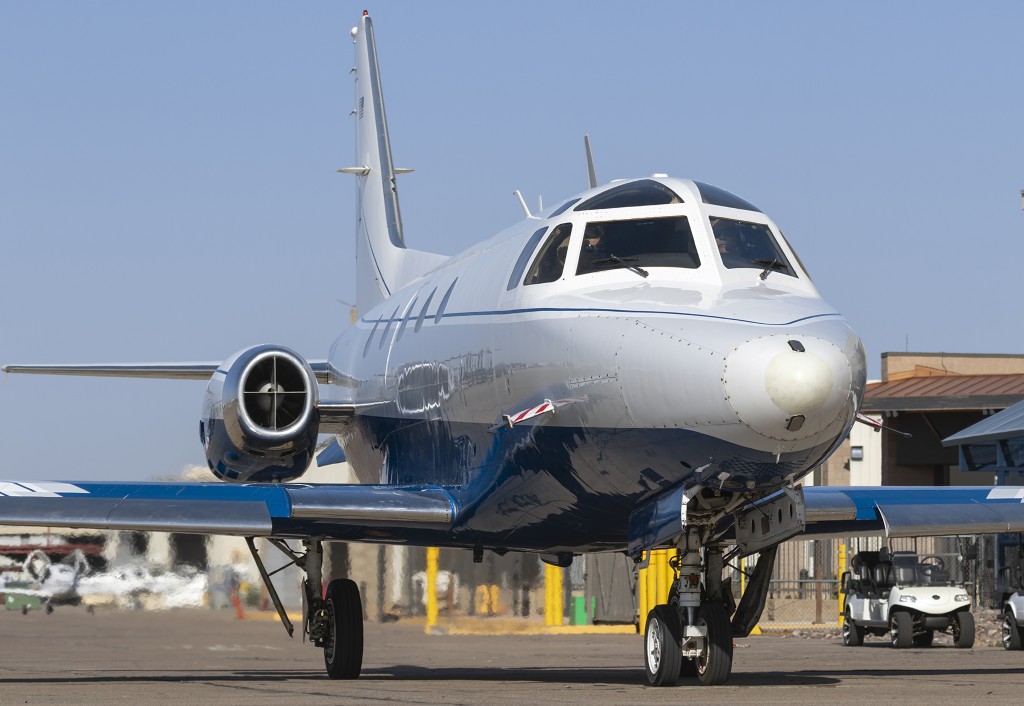
Aircraft availability alone can create a challenge. A program may be competing for time on a platform that supports multiple projects, or the aircraft available to the team may require extensive modification before it can accommodate the technology being tested.
Integration can create another delay. Something that works well in a lab still has to physically and operationally work with an aircraft. Mounting, power, data collection, antennas, pods and other requirements can all affect how quickly a test can move forward.
None of these challenges are unusual. But when they aren’t accounted for early, they can add weeks or months to a development schedule.
Flight Testing Doesn’t Have to Wait Until the End
One way to avoid that bottleneck is to think about flight testing earlier in the development process.
Not every test flight needs to represent a final, fully mature system. Developmental flight testing can be used to answer specific questions along the way.
How does the technology respond to vibration and movement? What happens at altitude? Does the system perform as expected in an actual airborne environment? Are there integration issues that weren’t apparent during ground testing?
Getting answers to those questions earlier can give engineering teams real-world data they can use to refine the technology before moving further into development.
That can be particularly valuable for lower-TRL technologies. Instead of waiting until every element of a system has been finalized, teams can use targeted flight testing to learn, make adjustments and then test again as the technology matures.
Start Thinking About the Aircraft Before You Need It
Avoiding delays also means considering the flight test platform early.
The right aircraft isn’t simply one that can carry the payload. It needs to support the objectives of the test.
That could mean accommodating a podded payload, external antenna or sensor. It could require specific power or data capabilities. The test may call for a particular altitude, speed, flight profile or operating environment.
Identifying those requirements early gives the flight test team time to determine how the technology will be integrated and what needs to happen before the first flight.
It also allows potential problems to surface while there is still time to solve them without disrupting the larger development schedule.

Build Flexibility Into the Test Program
Development rarely happens exactly as planned.
The first flight may answer one question and raise three more. Engineers may want to change a configuration, collect additional data or test the system under different conditions.
A flight test program that can adapt to those findings can be much more useful than one built around a rigid, one-time test event.
Flexible aircraft platforms and rapid integration capabilities make it easier to take an iterative approach: fly, collect data, learn, adjust and fly again.
That turns flight testing into part of the development process rather than a hurdle that has to be cleared at the end of it.
Get to the Data Faster
Ultimately, the goal of developmental flight testing isn’t simply to get a technology into the air. It’s to get useful information back to the people developing it.
The sooner engineers can see how a system performs in a real airborne environment, the sooner they can make informed decisions about what comes next.
At G&G Aero, we work with aerospace and defense teams to make that process more accessible. Our flexible airborne test platforms and integration capabilities are designed to help programs move from ground development to real-world flight testing without turning the test itself into a major roadblock.
If you’re developing a technology that needs to get out of the lab and into the air, talk to G&G Aero about what it will take to start testing.